Home Monument types Enclosure (prehistoric and Romano-British)
What is an enclosure (prehistoric and romano-british)?
An enclosure is an area of land surrounded by a bank, ditch, wall, palisade or similar barrier. Many Iron Age and Romano-British farmsteads and small settlements were enclosed in this way.
- Period
- Later prehistoric and Roman, mainly Iron Age and Romano-British, about 800 BC to the 5th century AD.
- Also called
- enclosed settlement, defended enclosure, banjo enclosure, farmstead enclosure, homestead, concentric enclosure
- Pages on Waystone
- 35 in England and Wales
What an enclosure (prehistoric and romano-british) is
Enclosures range from small farmsteads with a single bank and ditch around a few round houses to larger settlements with several circuits of bank, and they may be curvilinear, rectilinear or irregular in plan. Banjo enclosures are a distinctive Iron Age type, found mainly in Wessex and the upper Thames valley: a small enclosure, usually under 0.4 hectares, reached by a long entrance passage between parallel ditches; over 200 are recorded, mostly of Middle Iron Age date. In south-west Wales a survey grant-aided by Cadw recorded 787 defended settlements in Carmarthenshire, Ceredigion and Pembrokeshire, including 562 definite or possible defended enclosures as well as hillforts and promontory forts. Without excavation, the date and purpose of an enclosure, whether settlement, stock pen or ceremonial site, is often uncertain.
How enclosure (prehistoric and romano-british)s look on LiDAR
An enclosure that survives as an earthwork shows as a closed circuit of bank and ditch with one or more entrance gaps, enclosing a level interior that may contain the circular platforms of round houses. Sky-view factor shows the ditch as a dark ring and a local relief model shows the bank and internal platforms, while on slopes positive and negative openness separate the bank from the ditch. Many lowland enclosures have been levelled by ploughing and are known only from cropmarks, while upland and woodland examples often survive as earthworks.
See LiDAR visualisations explained for what each method shows.
What can look like one
Post-medieval stock pens and sheepfolds, tree-planting rings, banks around ponds, medieval ringworks and small hillforts can look similar. Henges differ in having the ditch inside the bank.
Protection
Many well-preserved enclosures are scheduled monuments, protected in England by the Ancient Monuments and Archaeological Areas Act 1979 and in Wales by the Historic Environment (Wales) Act 2023.
Examples on the LiDAR
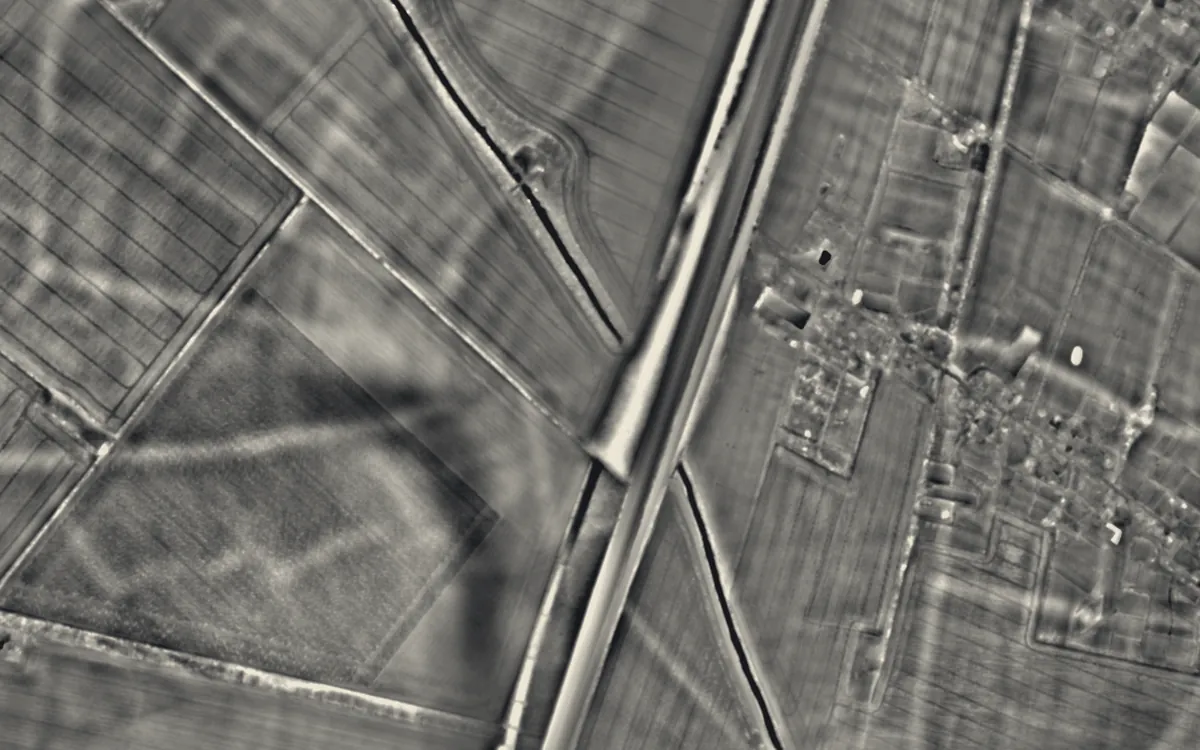 Brent DitchCambridgeshire
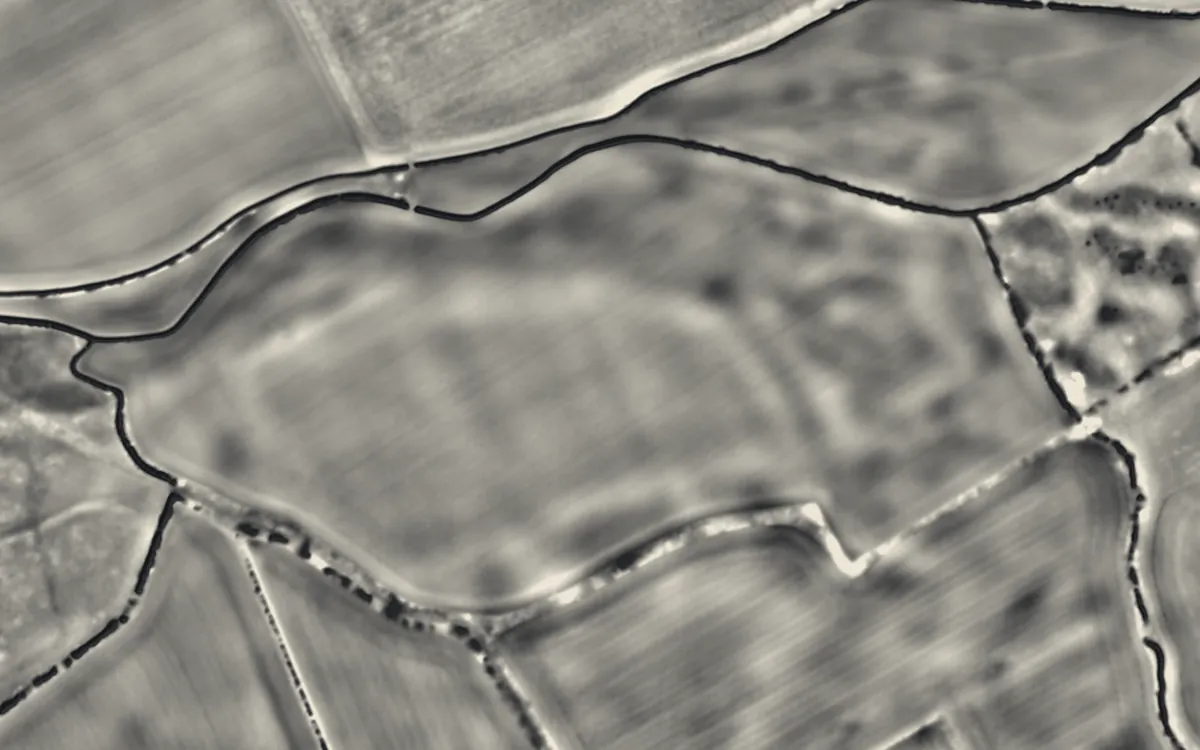 Causewayed enclosure 900m west of Great Wilbraham parish churchCambridgeshire
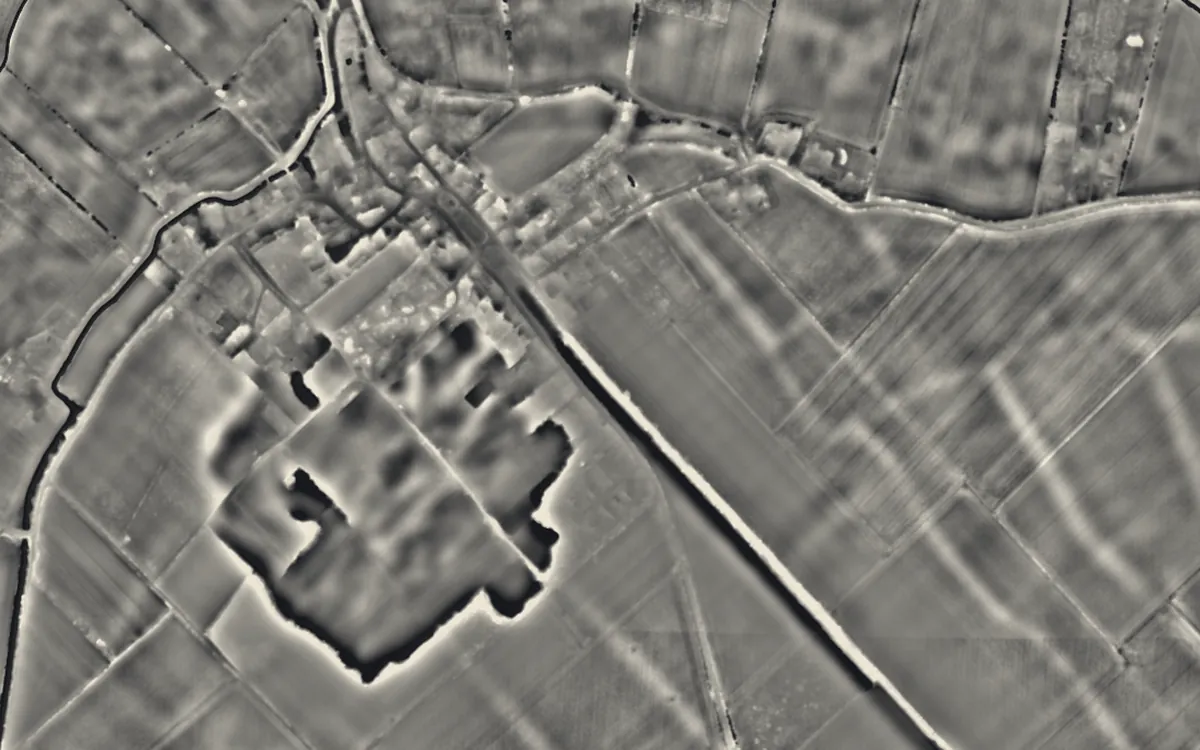 Devil's DykeCambridgeshire
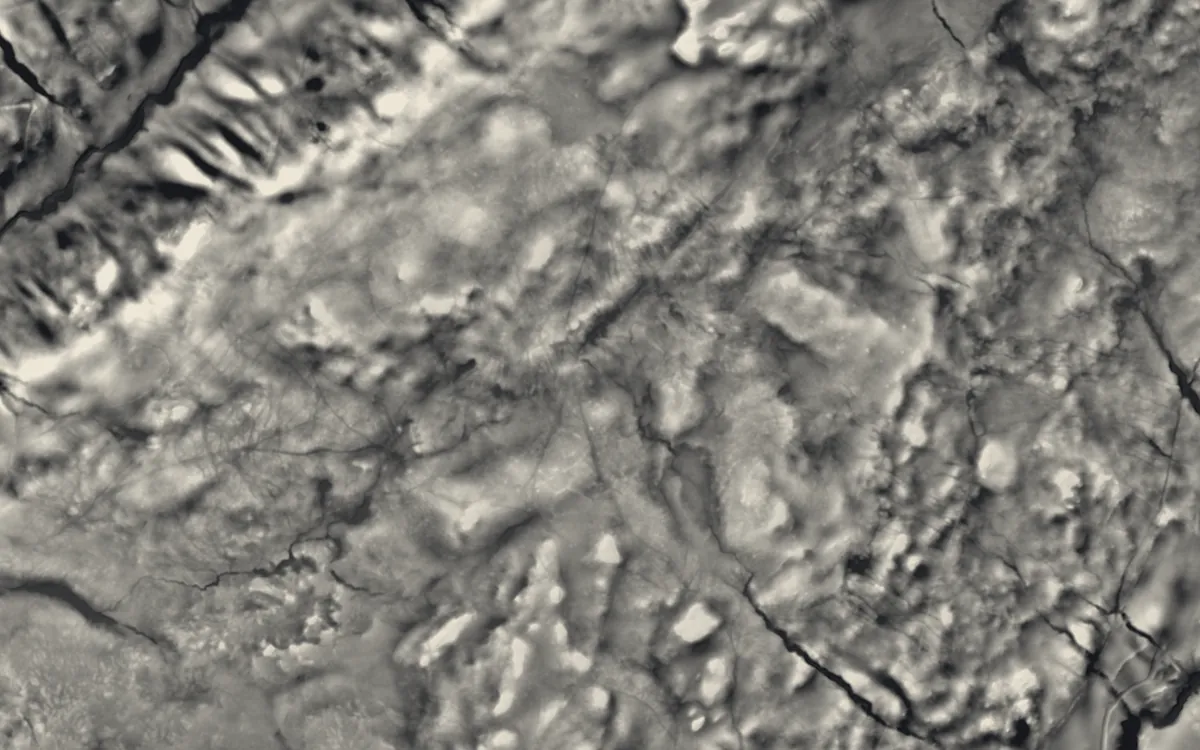 Cairnfield including a prehistoric enclosure, 5 stone circles, 10 funerary cairns, 6 stone banks, 2 stone walls, a lynchet and aCumbria
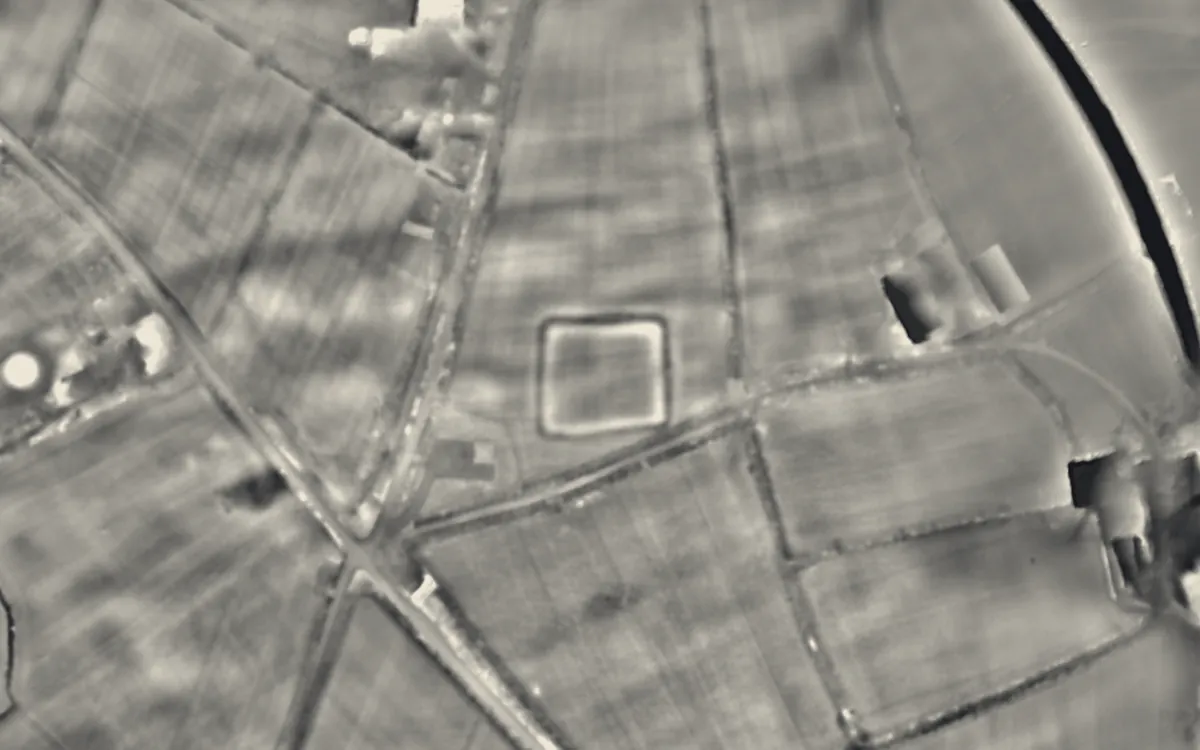 Broadbury CastleDevon
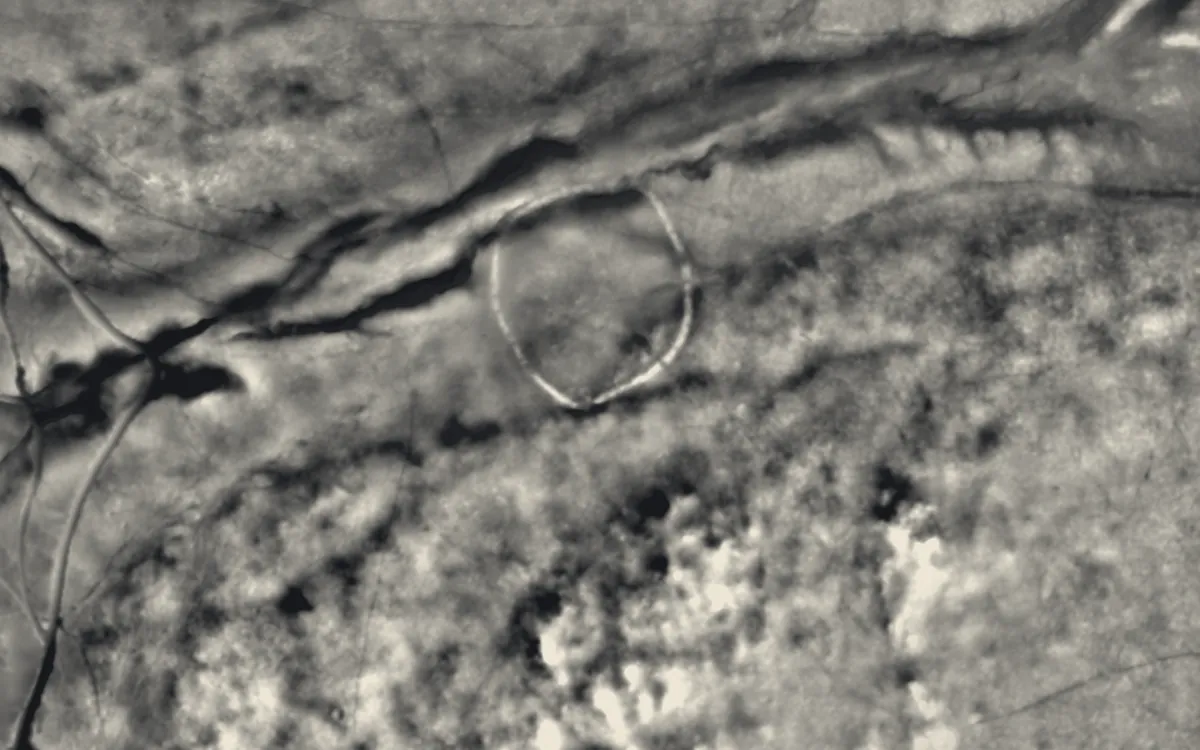 GrimspoundDevon
Where they are
Counties with the most enclosure (prehistoric and romano-british)s that have a page here.
- Northumberland4 with a page
- West Sussex4 with a page
- Cambridgeshire3 with a page
- Dorset3 with a page
- East Sussex3 with a page
- Wiltshire3 with a page
- Devon2 with a page
- Essex2 with a page
- Isle of Anglesey2 with a page
- Somerset2 with a page
- Cumbria1 with a page
- Greater London1 with a page
- Hampshire1 with a page
- Monmouthshire1 with a page
- North Yorkshire1 with a page
- Pembrokeshire1 with a page
- Shropshire1 with a page
More examples
- Martin Down enclosure 300m north of Huish BarnDorset
- RingmoorDorset
- West RingsteadDorset
- Neolithic causewayed enclosure on Combe HillEast Sussex
- Offham Hill Causewayed EnclosureEast Sussex
- Whitehawk CampEast Sussex
- Cressing TempleEssex
- Pleshey Castle and town enclosureEssex
- SulloniacisGreater London
- Bronze Age and Romano-British enclosure on Martin Down, east of Bokerley JunctionHampshire
- Bryn EryrIsle of Anglesey
- Din Llugwy Romano-British VillageIsle of Anglesey
- Venta SilurumMonmouthshire
- Star CarrNorth Yorkshire
- Defended settlement on Slate Hill, 300m north west of Bolam LakeNorthumberland
- Huckhoe palisaded enclosure, defended settlement and Romano-British settlement, 550m north east of Bolam West HousesNorthumberland
- Prehistoric enclosed settlement, Iron Age hillfort and medieval shielings on Humbleton HillNorthumberland
- Romano-British settlement and Iron Age defended settlement, 550m north east of Shaftoe GrangeNorthumberland
- Bedd ArthurPembrokeshire
- Multiple enclosure hillfort on Coxall KnollShropshire
- Long Wood EnclosureSomerset
- Meare Lake VillagesSomerset
- Barkhale Camp causewayed enclosureWest Sussex
- Harting Beacon: a hilltop enclosure, Anglo-Saxon burial mound and telegraph station on Beacon and Pen HillsWest Sussex
- Neolithic causewayed enclosure and associated remains on Court HillWest Sussex
- Prehistoric flint mine and a Martin Down style enclosure on Harrow hill, 850m south east of Lee FarmWest Sussex
- Knap HillWiltshire
- South Lodge camp Bronze Age enclosure with associated field system and round barrow cemetery, 350m east of Rushmore FarmWiltshire
- Square earthwork enclosure 450m north west of Baltic Farm on Morgan's HillWiltshire
Sources
- FISH Thesaurus of Monument Types (Historic England): Enclosure
- FISH Thesaurus of Monument Types (Historic England): Enclosed Settlement
- FISH Thesaurus of Monument Types (Historic England): Banjo Enclosure
- Monument Type Thesaurus (Wales), RCAHMW: Defended Enclosure
- Historic England, Introductions to Heritage Assets: Prehistoric and Romano-British Settlements with Structures
- Historic England, Introductions to Heritage Assets: Banjo Enclosures
- Historic England, National Heritage List entry 1013524: Banjo enclosure, 330m south west of Manor Farm
- Murphy, K. and Murphy, F. Iron Age Hillforts and Defended Enclosures in Southwest Wales. Internet Archaeology 28
- Relief Visualization Toolbox documentation: Sky-view factor
- Relief Visualization Toolbox documentation: Openness
Last updated 2026-10-16.