The working kit.
- 01 LiDAR terrain analysis Airborne
- 02 Aerial archaeological survey Tracings
- 03 Victorian Ordnance Survey Cartography
- 04 County histories Antiquarian
- 05 Excavation reports Field
A heritage guide for the United Kingdom and Ireland. One person builds it, funds it, and runs it.
They were built for archaeologists, archivists, and researchers — people who have spent careers learning how to read a landscape, which records to pull, and how to connect evidence scattered across dozens of different archives and agencies. That knowledge exists. It has simply never been handed to the person standing in a field wondering what the bank in front of them used to be.
Waystone is built on a simple idea: take the tools, the data, and the methods the professionals use — and put them in your hands. Not a simplified version. Not a summary of a summary. The real thing, made navigable.
Waystone brings them together in one place, ties them to the ground beneath your feet, and gives you an AI that can read them alongside you — in plain language, sourced to the page. You arrive somewhere not knowing what you are looking at. You leave knowing.
Not a plaque’s worth of facts. The real, sourced history of an ordinary place.
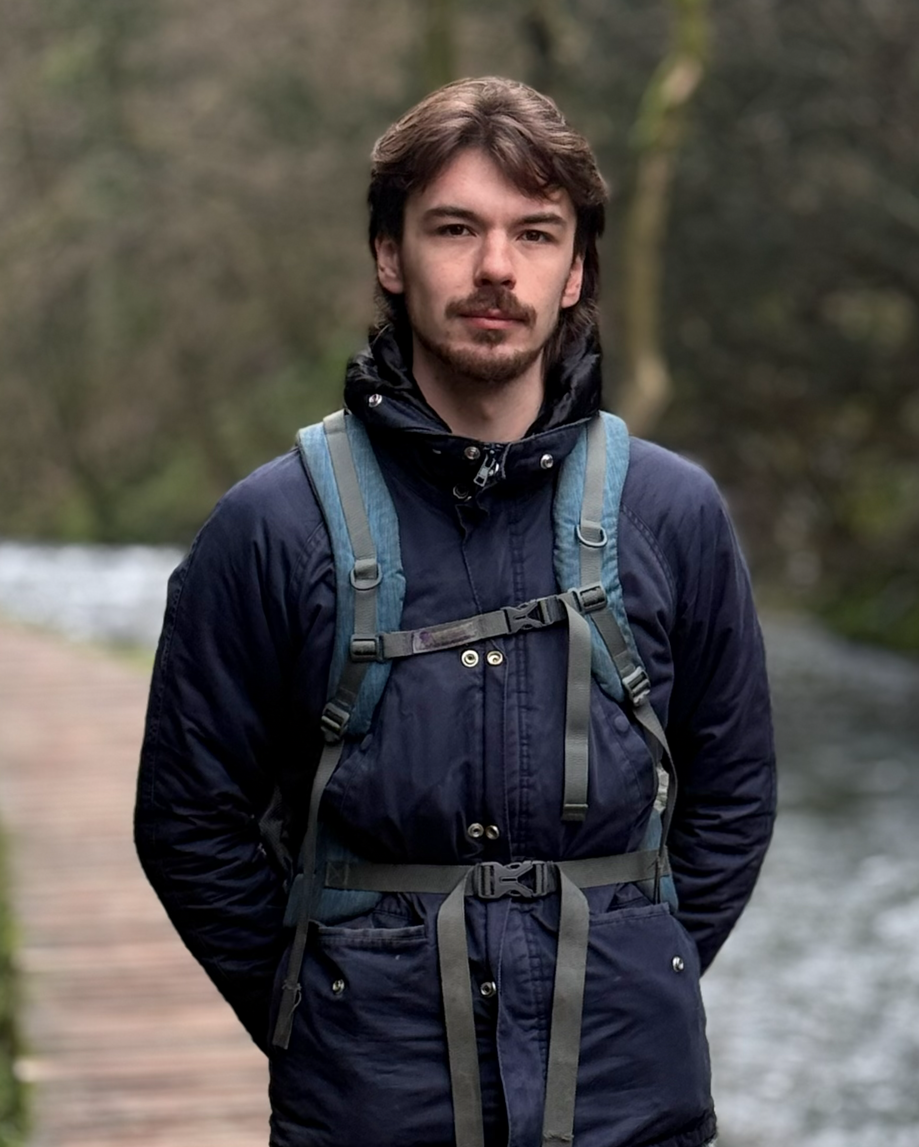
For years, cycling through the countryside, I’d come across ruins, earthworks, hollow ways, and forgotten places with no easy way to satisfy the questions they raised. The curiosity had nowhere to go — not because the answers didn’t exist, but because they were locked inside systems and archives that weren’t designed for someone out on a bike on a Thursday afternoon.
I built Waystone to solve that. Not as a product pitch, not as a startup — as something I genuinely needed and couldn’t find. As it grew, it became clear I wasn’t the only one. The same encounters, the same questions, the same places with no story anyone still remembered. So I opened it up.
There’s no company behind it, no team, no investors. That means it moves the way I think is right, without committees or compromise. All feedback goes directly to me and it helps shape the experience from something I made useful for me into something that’s useful for you.
Some of the richest evidence about a place is cartographic. The first detailed Ordnance Survey maps, drawn in the nineteenth century, recorded field names, vanished buildings, old industries, and antiquities in extraordinary detail. But that information is locked inside the maps as printed words and symbols — legible to a person, invisible to a computer.
Waystone’s research collaboration with the National Library of Scotland — which holds one of the world’s great map collections — is changing that. A machine-learning pipeline reads the printed text and symbols off the historical maps and turns them into structured, searchable data. The Library gains structured data drawn from its own collection. Waystone gains a layer of historical evidence no other product has access to, queryable directly by our AI.
Waystone isn’t a simple app. Under the surface it’s a fairly complex set of systems working together — and getting them to fit is most of the work. None of these parts are exotic in isolation. The work is in how they meet, and in the quality of the data underneath them.
Acts as a librarian, not an expert — it reads the relevant passages from the corpus and narrates what it finds. It cannot go beyond what’s in the library.
Raw bare-earth laser-survey data, processed through a custom pipeline to make ancient features readable to an untrained eye, then annotated by the AI using the underlying site records.
Our own custom map built from vector tiles and styled to surface different layers of history at different zoom levels — modern landscape, Victorian survey, Roman roads, aerial archaeology — each drawn from real data.
2.8 million passages of heritage text — excavation reports, county histories, folklore collections, out-of-print books — indexed, tied to the places they describe, and closed to the outside web.
A custom-built pipeline gathers and reconciles records from twenty-eight separate heritage archives into a single consistent dataset of over 850,000 places across the UK. That’s the map’s backbone.
A simple app on the outside. The work is everything underneath it.
The data underneath is real. The app around it keeps moving — these are the waypoints ahead.
The web app is open to anyone: the map, the AI narration, Ancient Ground. Rough in places, improving week by week.
Ask Waystone to plan a walk and it routes one through genuinely interesting sites, with a narration waiting at each stop.
A record of where you’ve been — sites logged as you walk, gathered into an account of the day at the end of it.
The 2.8-million-passage library, opened up as an archive you can search and read for yourself.
A map of how places connect — site to site, by shared history, builder, event, or story — rather than only by where they happen to sit.
The web app is in open beta. It works, it’s genuinely useful, and it’s unfinished — some features are rough, some are missing, and things will change. The data underneath it isn’t unfinished: the 850,000-place map and the 2.8-million-passage corpus are real and already working. What’s still being built is the app around them.
The most useful thing you can do is tell me what’s broken or confusing. There’s no support desk — feedback goes straight to me.
Runs in any browser. Nothing to install. Free while the beta lasts.
Open the map where you are, or somewhere you know well, and see what surfaces around you.
If something breaks or reads incorrectly, report it. That’s the whole point.
The version you use next month won’t be the version you used today.