Home Monument types Roman fort
What is a roman fort?
A Roman fort was a permanent or semi-permanent base for a unit of the Roman army, usually auxiliary troops, enclosed by a rampart and one or more ditches. Forts were almost always rectangular with rounded corners, the so-called playing-card shape.
- Period
- Roman, mainly mid-1st to mid-2nd century AD; some occupied into the 4th century.
- Also called
- auxiliary fort, castellum, fortlet, legionary fortress, caer (Welsh, in place-names)
- Pages on Waystone
- 94 in England and Wales
What a roman fort is
The rampart was first built of turf, clay or earth with timber buildings inside, and from the early 2nd century many forts were rebuilt in stone; inside stood a headquarters building, the commander's house, granaries and barracks. Historic England notes that most forts in England date from the mid-1st to the mid-2nd century AD and that they are extremely rare south of a line from the Severn to the Trent. Wales was occupied by AD 78 and held by a network of auxiliary forts under the legions based at Caerleon and Chester; Gelligaer, for example, has two forts of the later 1st century AD. Some forts were occupied for only a few years, while others stayed in use for long periods. Fortlets, usually under 1 hectare, held small patrols, and legionary fortresses held a whole legion.
How roman forts look on LiDAR
Where a fort survives as earthworks, it shows as a rectangular platform with rounded corners, bounded by a rampart and one or more ditches, usually with gate gaps near the middle of the sides. A local relief model shows the rampart and the low remains of internal buildings and roads, and sky-view factor or negative openness picks out the outer ditches, which are often multiple. Many forts lie under later towns or have been ploughed, so only one or two sides may survive, sometimes as a scarp along a later field edge.
See LiDAR visualisations explained for what each method shows.
What can look like one
Medieval moated sites, later stock enclosures, landscape-garden earthworks and the rectangular enclosures of Iron Age and Romano-British farmsteads can look like forts. A Roman marching camp has the same rounded-corner plan but usually encloses a larger area behind a much slighter bank.
Protection
Many Roman forts are scheduled monuments, protected in England by the Ancient Monuments and Archaeological Areas Act 1979 and in Wales by the Historic Environment (Wales) Act 2023, and the forts of Hadrian's Wall are also part of the Frontiers of the Roman Empire World Heritage Site.
Examples on the LiDAR
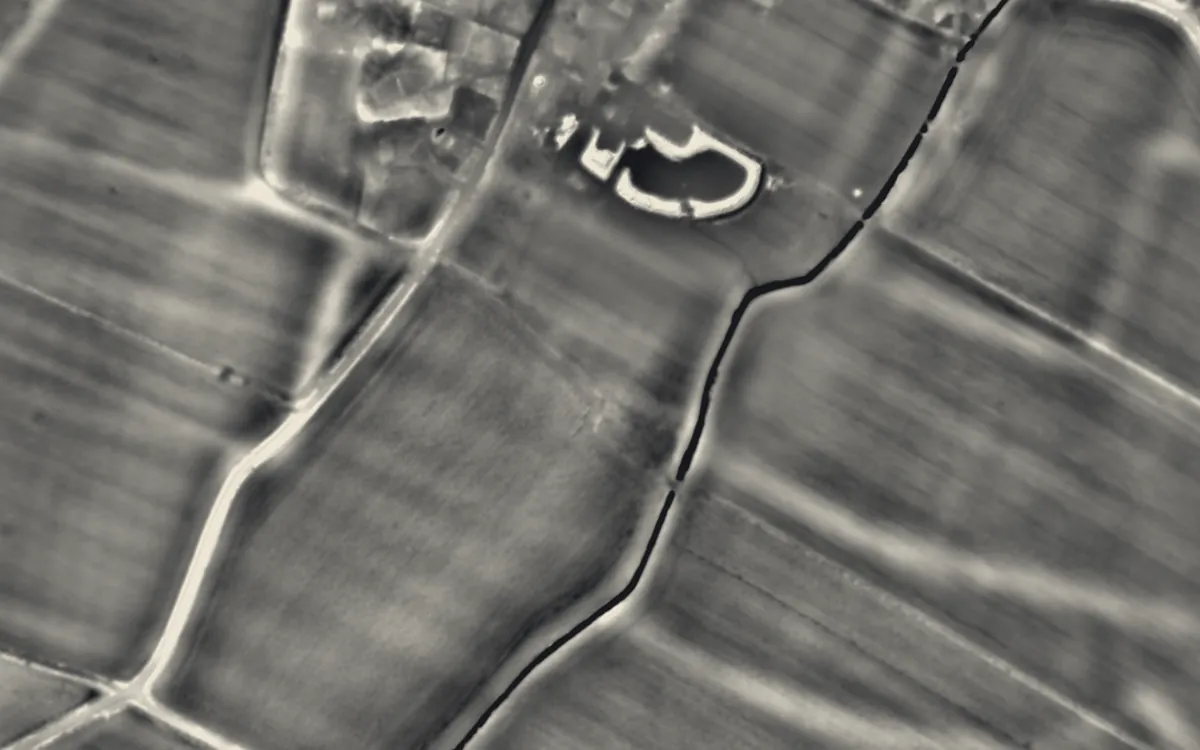 Totternhoe Roman villaBedfordshire
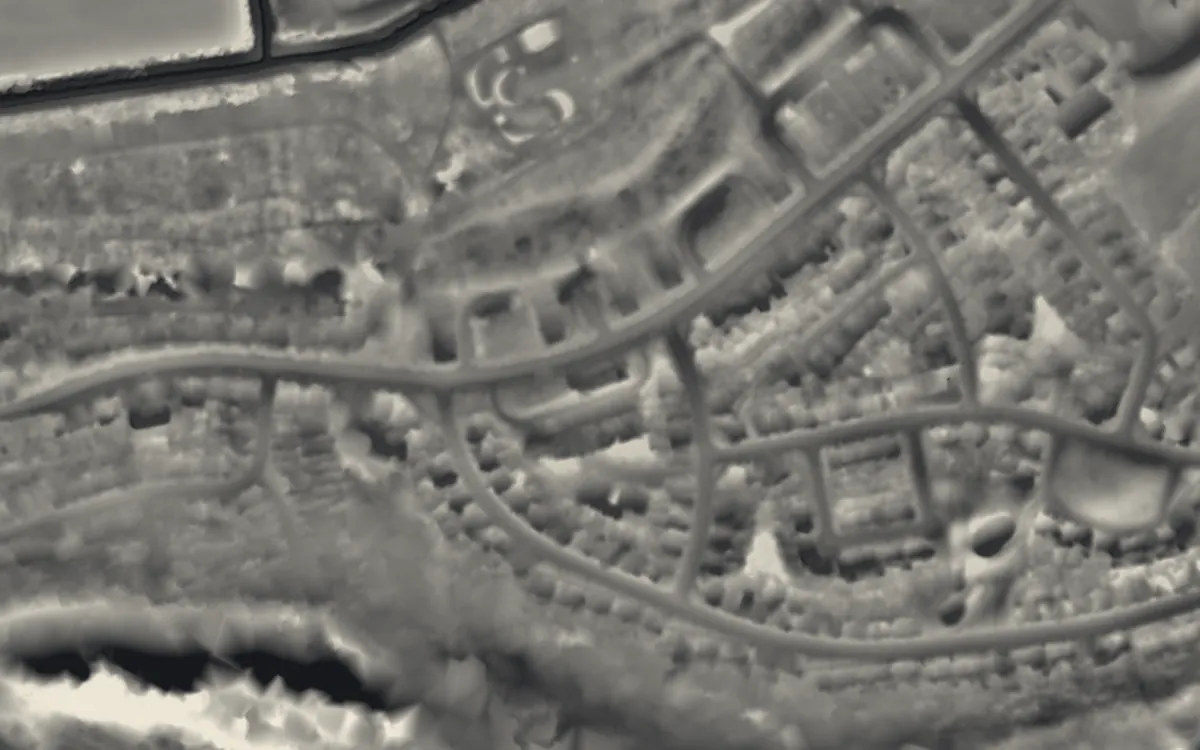 Kings Weston Roman VillaBristol
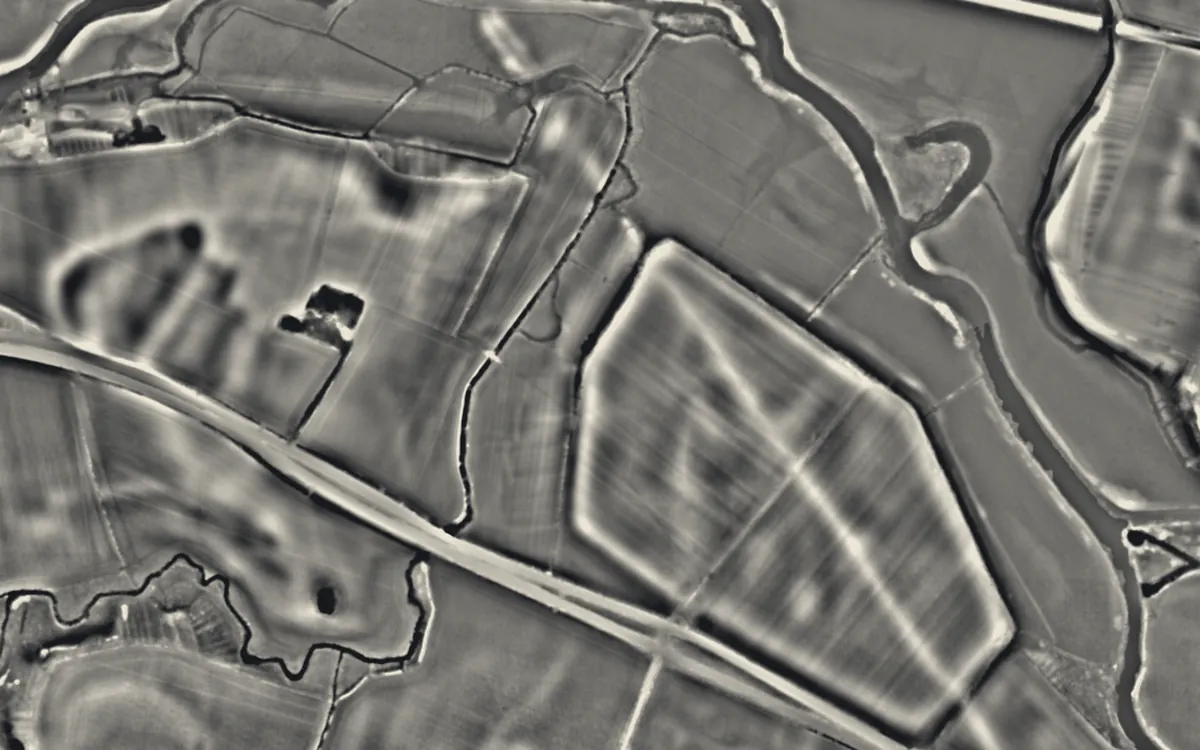 DurobrivaeCambridgeshire
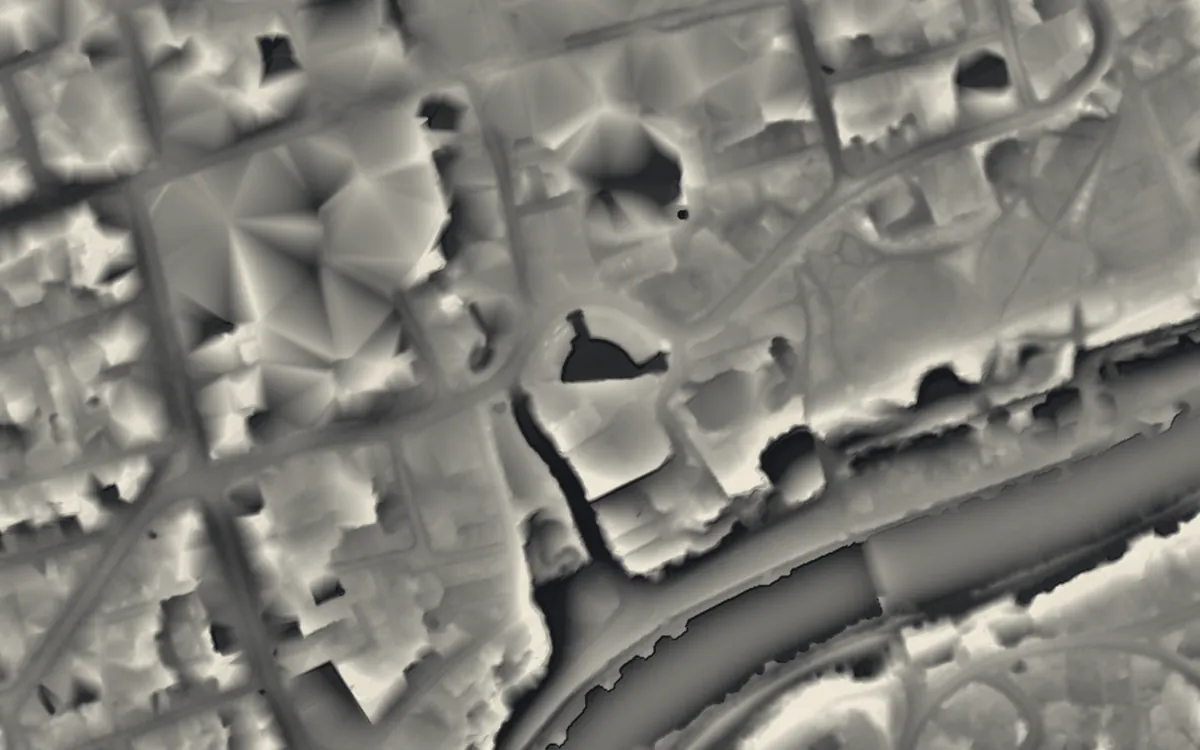 Chester Roman AmphitheatreCheshire
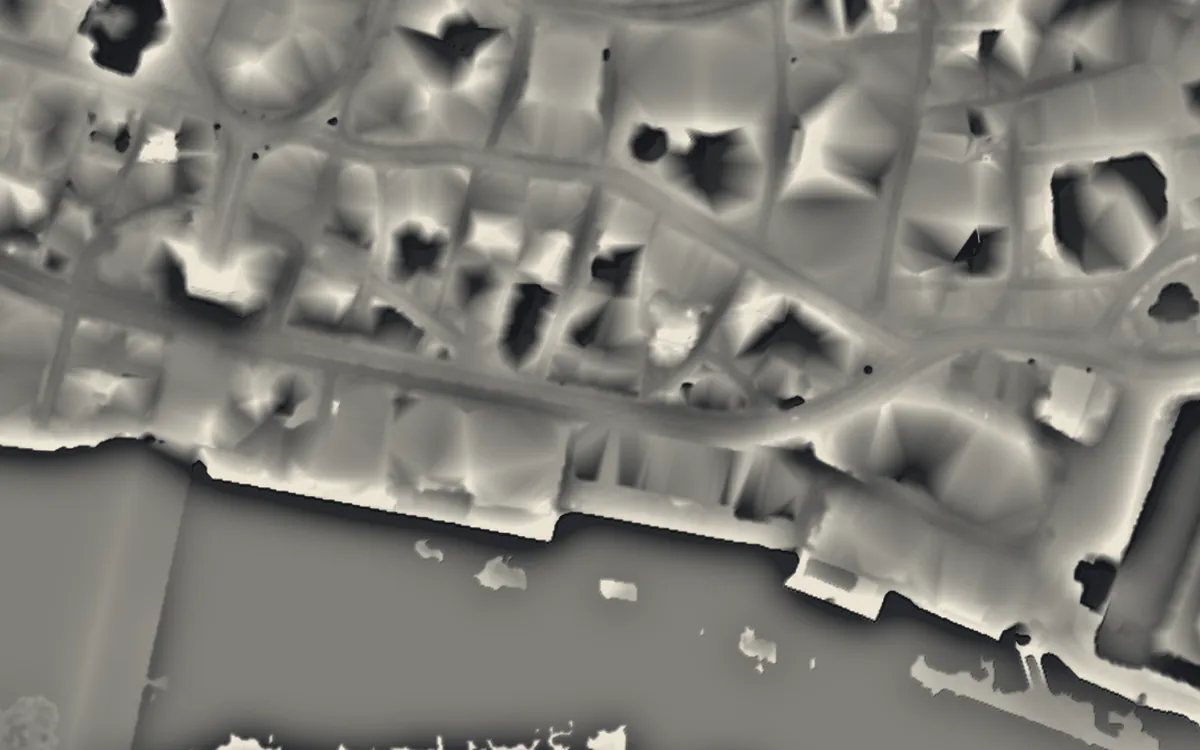 Billingsgate Roman House and BathsCity of London
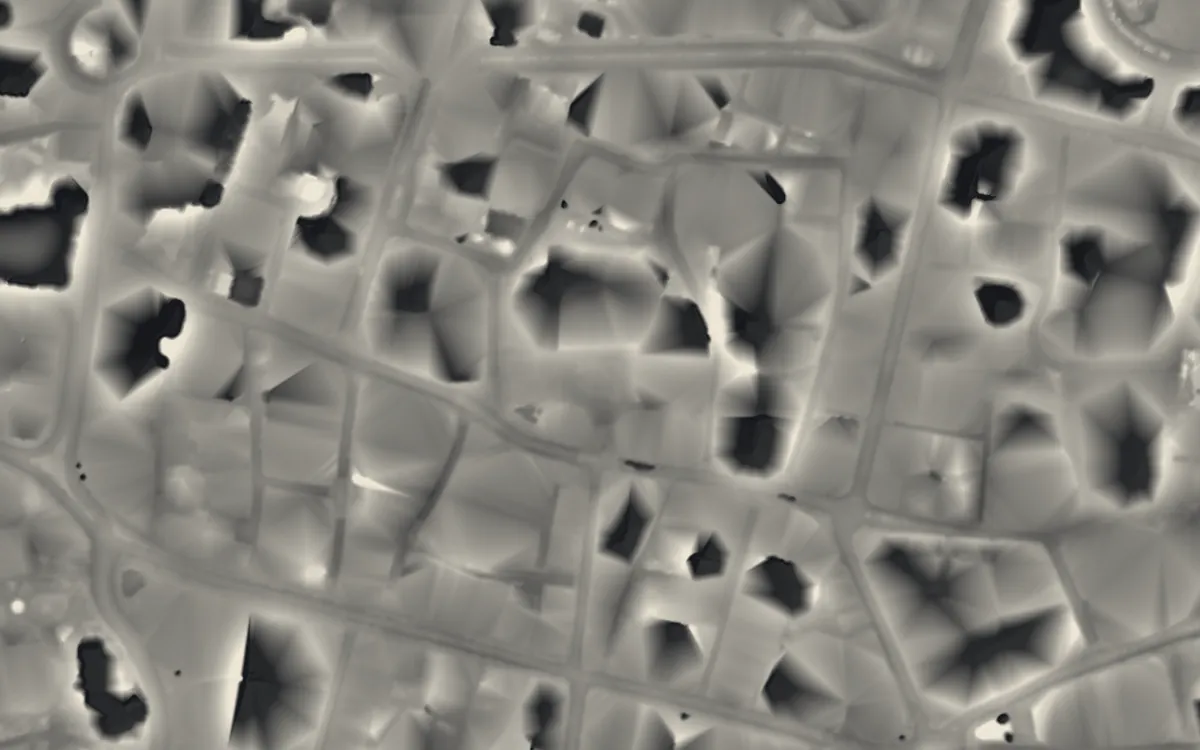 Roman amphitheatre, Guildhall YardCity of London
Where they are
Counties with the most roman forts that have a page here.
- Cumbria16 with a page
- County Durham6 with a page
- Gloucestershire6 with a page
- Northumberland5 with a page
- North Yorkshire4 with a page
- Derbyshire3 with a page
- Gwynedd3 with a page
- Hertfordshire3 with a page
- Lancashire3 with a page
- City of London2 with a page
- Conwy2 with a page
- East Riding of Yorkshire2 with a page
- Hampshire2 with a page
- Isle of Wight2 with a page
- Lincolnshire2 with a page
- Newport2 with a page
- Norfolk2 with a page
- Oxfordshire2 with a page
- Powys2 with a page
- Tyne & Wear2 with a page
- West Sussex2 with a page
- West Yorkshire2 with a page
- Bedfordshire1 with a page
- Bristol1 with a page
More examples
- Caer LlugwyConwy
- CanoviumConwy
- Binchester Roman FortCounty Durham
- ConcangisCounty Durham
- Lavatrae Roman FortCounty Durham
- LongoviciumCounty Durham
- Piercebridge Roman FortCounty Durham
- VindomoraCounty Durham
- AlaunaCumbria
- GalavaCumbria
- GlannoventaCumbria
- Hardknott Roman FortCumbria
- Milefortlet 1Cumbria
- Milefortlet 12Cumbria
- Milefortlet 17Cumbria
- Milefortlet 20Cumbria
- Milefortlet 21Cumbria
- Milefortlet 22Cumbria
- Milefortlet 23Cumbria
- Milefortlet 3Cumbria
- Milefortlet 4Cumbria
- Milefortlet 5Cumbria
- Milefortlet 9Cumbria
- Ravenglass Roman Bath HouseCumbria
- ArdotaliaDerbyshire
- Batham GateDerbyshire
- Navio Roman fortDerbyshire
- Romano-British villa at Cockle Pits, near BrantinghamEast Riding of Yorkshire
- Rudston Roman villaEast Riding of Yorkshire
- Pevensey CastleEast Sussex
Sources
- FISH Thesaurus of Monument Types (Historic England): Fort (includes Roman Fort)
- FISH Thesaurus of Monument Types (Historic England): Roman Fortlet
- Monument Type Thesaurus (Wales), RCAHMW: Fort
- Historic England 2018, Roman Forts and Fortresses: Introductions to Heritage Assets (ADS record via DOI)
- Historic England, National Heritage List entry 1017565: reasons for designation (Roman forts)
- Historic England, National Heritage List entry 1003592: Roman fort (Buckton Park)
- Amgueddfa Cymru - Museum Wales: Romans (curatorial collections)
- Coflein (RCAHMW): Gelligaer Roman Military Settlement, NPRN 275863
- Relief Visualization Toolbox documentation: Simple local relief model
Last updated 2026-10-16.